nikhil.io

twenty-six things tagged “sculpture

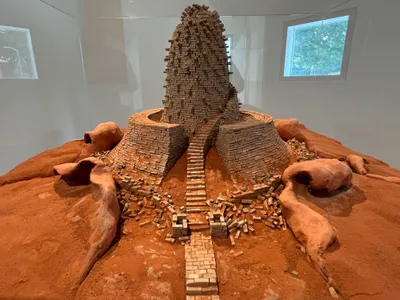
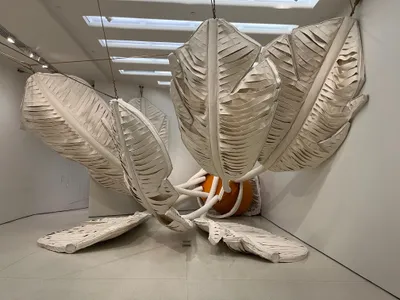
BRICK BLOSSOM by Charles Simonds

Charles Simonds

American, born 1945

BRICK BLOSSOM, 1981

Clay, sand, and sticks

Des Moines Art Center Permanent Collections; Purchased with funds from the Gardner and Florence Call Cowles Foundation, 1982.1

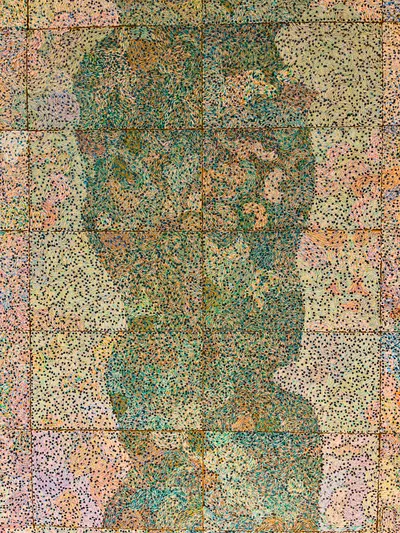
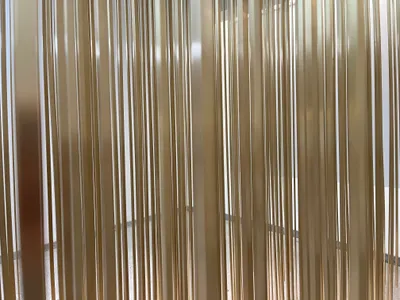
TIGHTROPE: NOISELESS 12 by Elias Sime

Elias Sime

Ethiopian, born 1968

TIGHTROPE: NOISELESS 12, 2019

Reclaimed electrical wires and components on panel

Des Moines Art Center Permanent Collections; Purchased with funds from the Edmundson Art Foundation, Inc., 2019.17.a-.zz

STRUCTURIST RELIEF, RED WING #50 by Charles Joseph Biederman

Charles Joseph Biederman

American, 1906 - 2004

STRUCTURIST RELIEF, RED WING #50, 1960-1966

Painted aluminum

Des Moines Art Center Permanent Collections; Gift of Louise R. Noun, 1968.36

Soft Shuttlecock by Claes Oldenburg

Claes Oldenburg

b. 1929, Stockholmd. 2022, New York

Soft Shuttlecock, 1995

Canvas, latex paint, expanded polyurethane foam, polyethylene foam, steel, aluminum, rope, wood, duct tape, fiberglass, and reinforced plastic

Solomon R. Guggenheim Museum, New York, Partial gift, Claes Oldenburg and Coosje van Bruggen, New York 95.4488

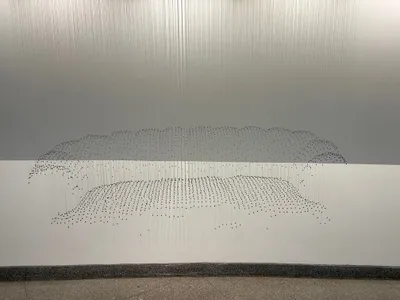
My Couch by Richard Berger

Richard Berger

b. 1944, Los Angeles - d. 2015, San Francisco

My Couch, 1976

Aluminum, thread, and lead

Collection of Carol Bove and Carson Terry

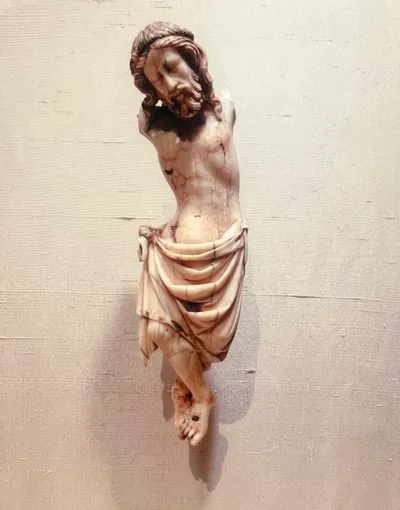
Crucified Christ by Unknown Artist

Unknown Artist

Crucified Christ, ca. 1300

Walrus ivory with traces of paint and gilding

The Cloisters Collection, 2005 (2005.274)

0018

0018

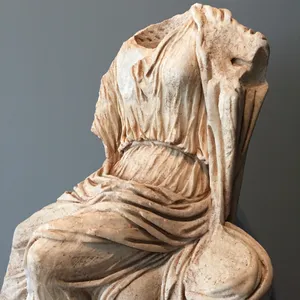
Statue of a Seated Woman from 101 CE–200 CE. “Here the figure’s head and arms, now missing, were made separately and attached by means of dowels, the holes for which are visible.” This was a kind of template (one of a few) for noblewomen, goddesses, and other exalted female figures.…

Netsuke

Summary of Wikipedia article: Japanese kimono didn’t have pockets. They needed something to store their stuff in. So they made containers that they hung from their kimonos’ sashes1. The part that secured the container to the sash at the top was called a netsuke (“root attached”.) Here’s a really c…

How to Make a Dorodango

Hikaru Dorodango means “Shining Mudcake”. Start with a lump of mud and end with a highly polished sphere. Absolutely amazing. Here’s a short NatGeo video about Bruce Gardner, an artist who makes a lot of these. He says it took him 30 tries to make his first perfect one. https://www.youtube.com/wat…

Richard Serra on Art

Q: Why make art? What do you find by doing it? What does it get you? Serra: I always wanted an alternative existence. And by that I mean I wanted to do something where I could study my own sentiments and experiences. And I found that I can do that in relation to making things and making art in pa…