Alexei Jawlensky
b. 1864, Torzhok, Russian Empire (now Russia) d. 1941, Wiesbaden, Germany
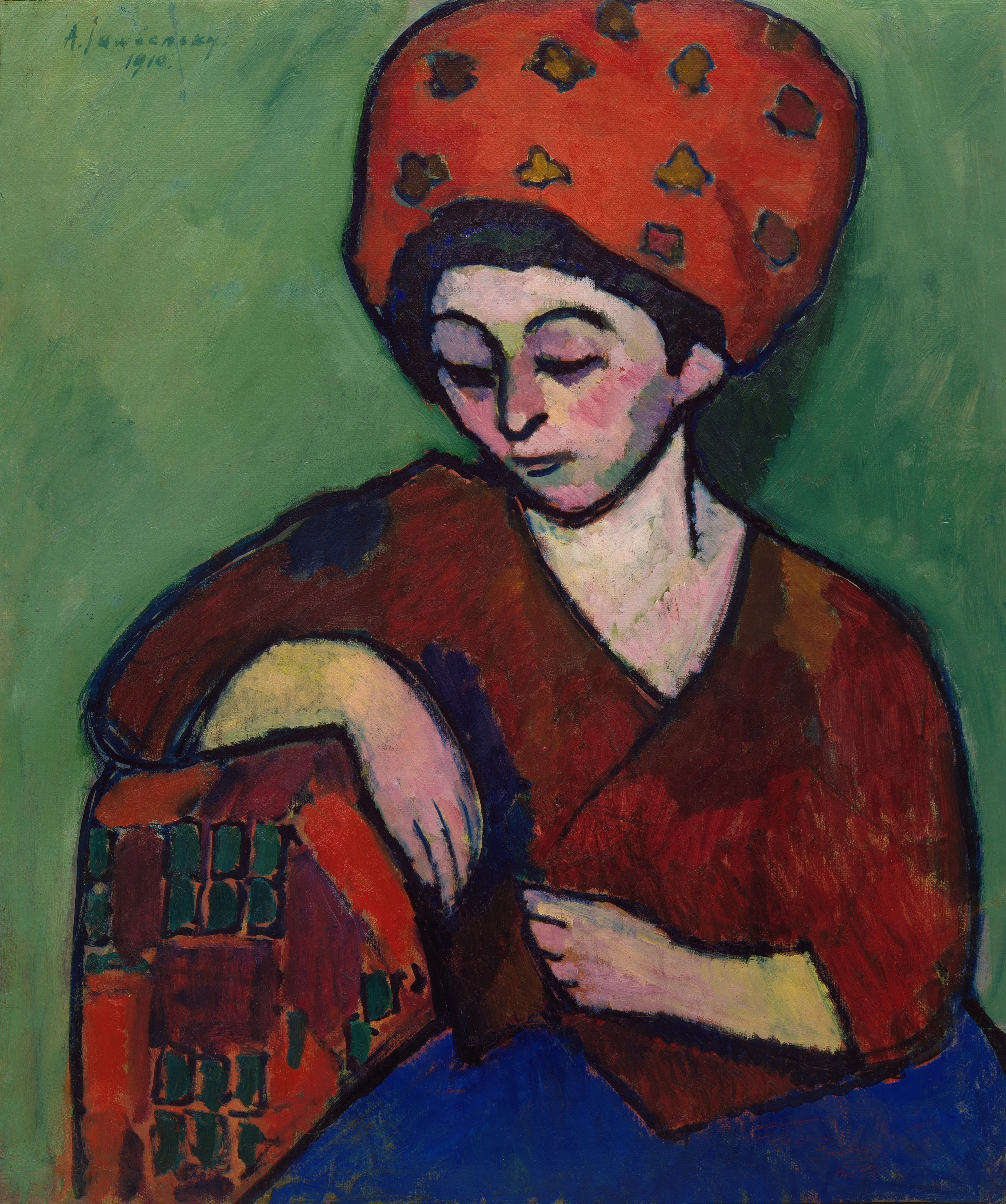
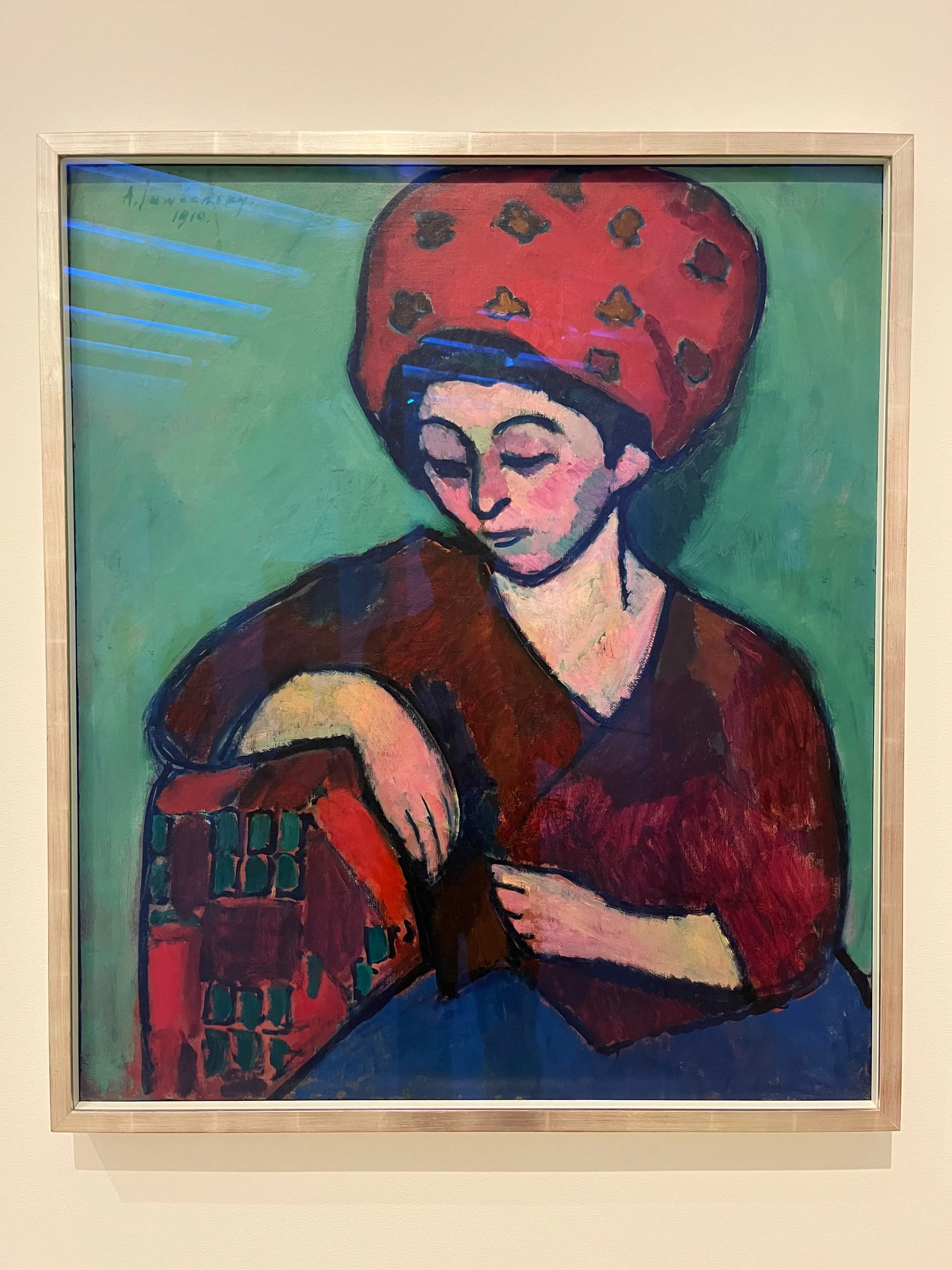
Helene with Colored Turban (Helene mit buntem Turban), 1910
Oil on board
There, he furthered his avant-garde practice, while Werefkin established an important intellectual salon that met weekly at their home. The two artists eventually joined Vasily Kandinsky and Gabriele Münter in advancing experimental art associations based in the city and the nearby village of Murnau am Staffelsee.
Jawlensky realized several likenesses of Nesnakomoff. This example displays the bright palette, flat color planes, and bold black contours gleaned from works by Paul Gauguin, Vincent van Gogh, and the Fauves (French for "wild beasts"), especially Henri Matisse. In fact, the composition's dominant feature-the figure's stylized turban—resembles that in Matisse's Red Madras Headdress (1907). The head covering, which recalls the traditional headwrap Russian peasant women wore, may also hint at Jawlensky's burgeoning interest in Russian folklore.